Painting Metal Siding on a Phoenix Mobile Home
June 21, 2026 · 6 min read
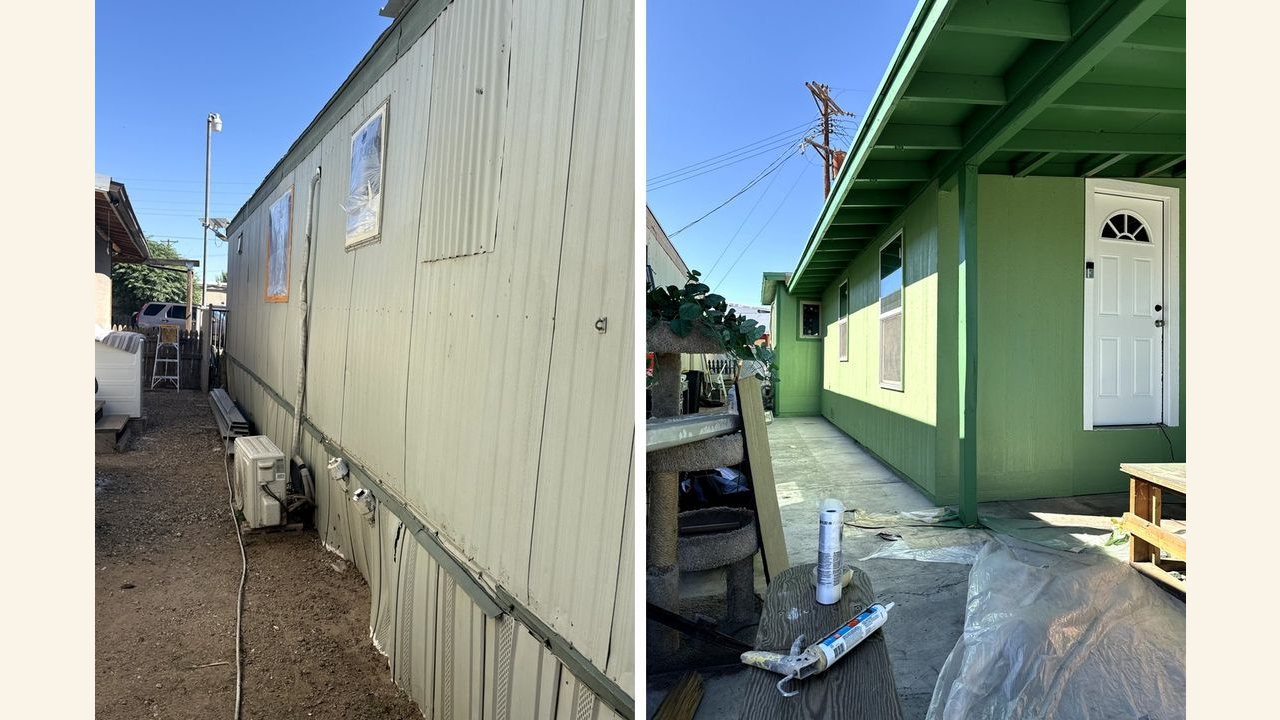
This was an exterior repaint of a single-story manufactured home in Phoenix, and it's a good one to show because most people think you can't paint metal siding. You can. It all comes down to the prep. The home started out with faded, chalky tan-gray metal lap siding that had been baking in the sun for years, and it finished in a bold three-tone green that makes the whole place look new. Painting metal siding in Phoenix isn't like painting stucco or brick, so here's how we did it.
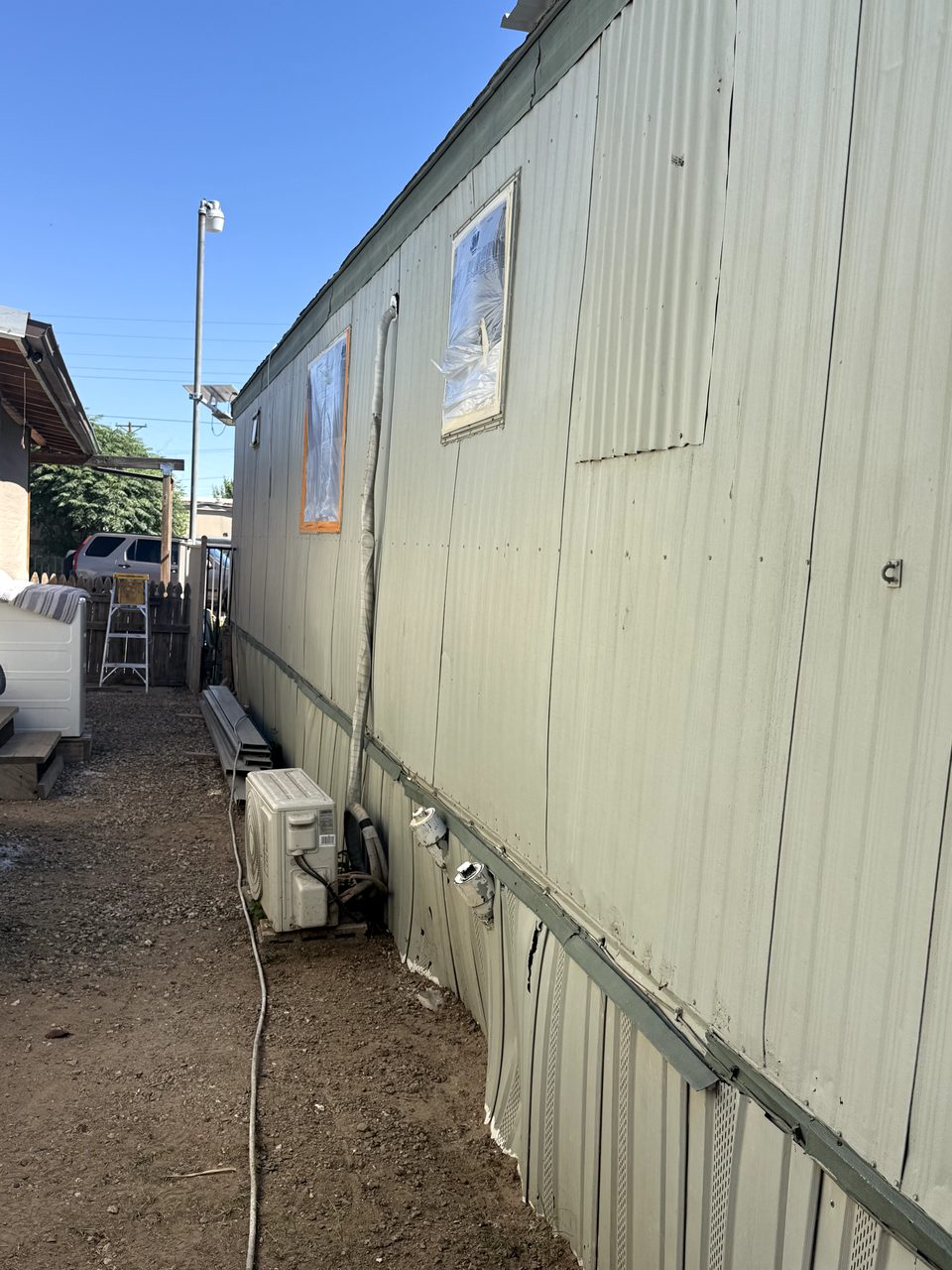
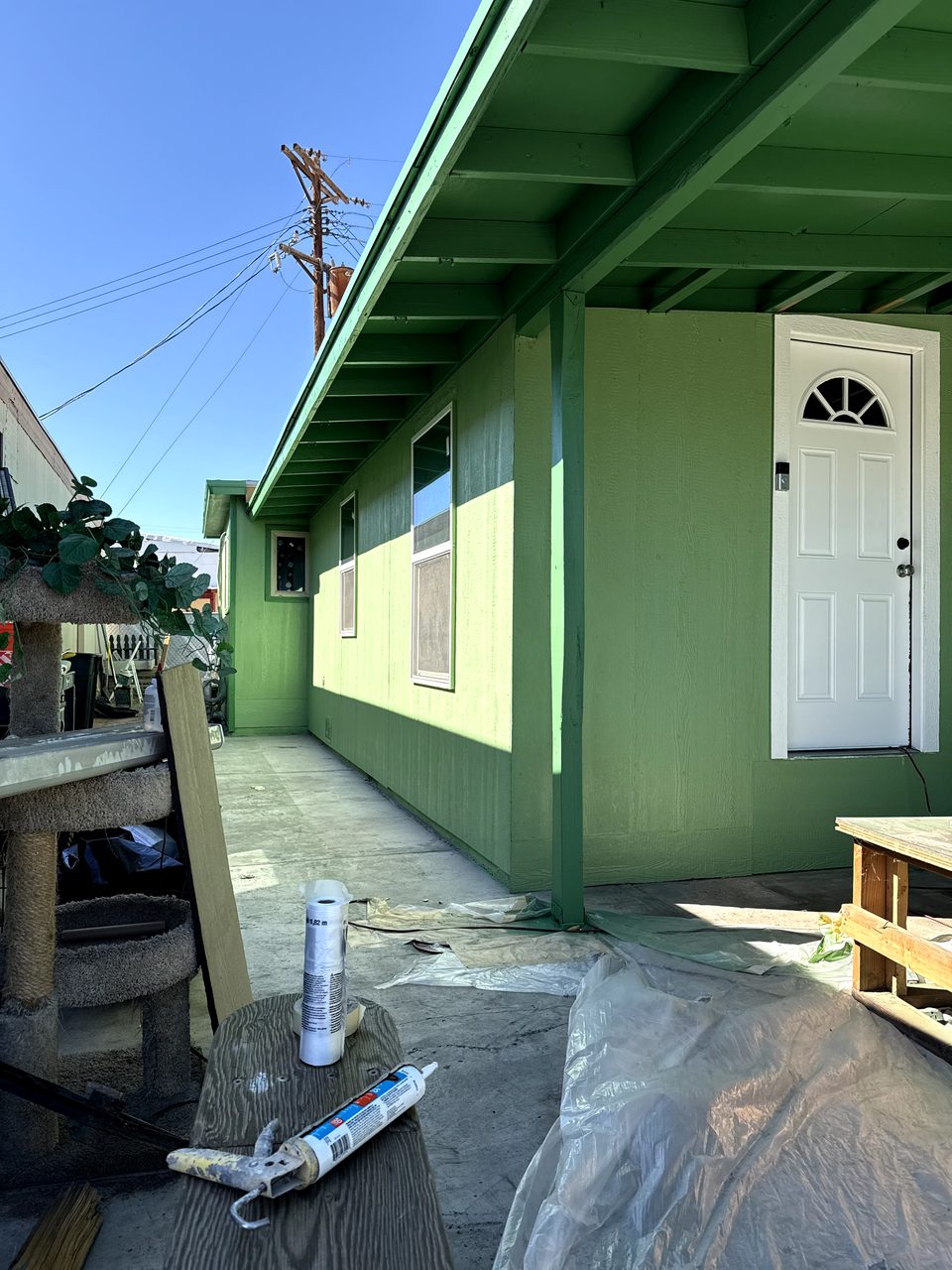
The home and the plan
The body of this house is horizontal metal lap siding, not the stucco you see on most Valley homes, and that one fact changes the whole job. Metal is slick, it's already coated from the factory, it oxidizes instead of crumbling, and it expands and contracts with the heat more than masonry does. So what you wash, what you prime with, and what kind of paint you use are all different. There's also a covered carport with exposed beams and a ceiling to handle. We mapped it as one job: wash, scuff, seal, prime, paint.
Step one: wash off the chalk and oxidation
Old metal siding doesn't peel the way wood does. It chalks. The sun breaks down the old finish into a powdery layer you can wipe off with your hand, and fresh paint will not bond to that. So the first thing we did was wash the whole house down to cut through the chalk, the oxidation, and the dirt, and then let it dry completely. If you skip this and paint straight over chalk, the new coat takes the old powdery layer down with it in a year or two. The wash is the foundation of the whole job.
Step two: scuff, de-gloss, and seal the gaps
Factory metal siding has a slick, semi-gloss finish, and paint doesn't grab a slick surface well. So after it dried we scuffed and de-glossed the siding to give the new coating something to bite into. Any spots showing rust got wire-brushed and sanded back to sound, bright metal, then spot-primed with a rust-inhibitive metal primer. You have to get down to clean metal, because if you paint over active rust it just keeps corroding under the new film and pushes the paint back off. Then we sealed the gaps and seams with an exterior-grade caulk. You can see the caulk tubes in the work photos. On metal, sealing the seams keeps water out from behind the panels, which is where corrosion starts.
Step three: a bonding primer made for metal
This is the step a metal repaint stands or falls on. We primed the siding with a bonding primer built for metal, a direct-to-metal acrylic, not a standard wall primer. A bonding primer is formulated to grip slick, previously coated surfaces and give the topcoat a surface it can actually hold onto. The bare and rust-treated spots got their primer too, so nothing would telegraph through the new color. Skip the right primer on metal and even good paint will sheet right off it down the road. The primer is what makes the rest last.
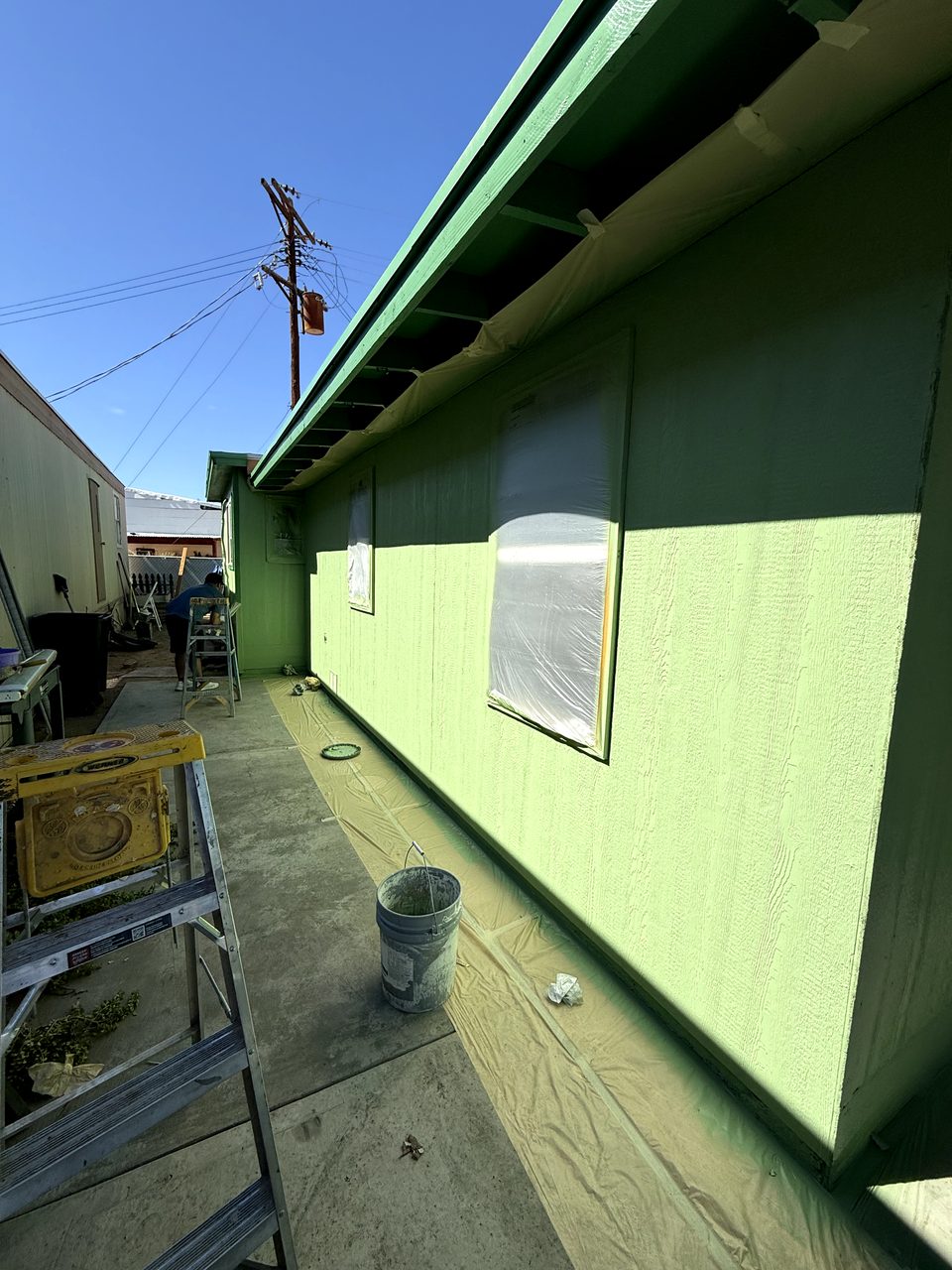
Step four: the three-tone green scheme
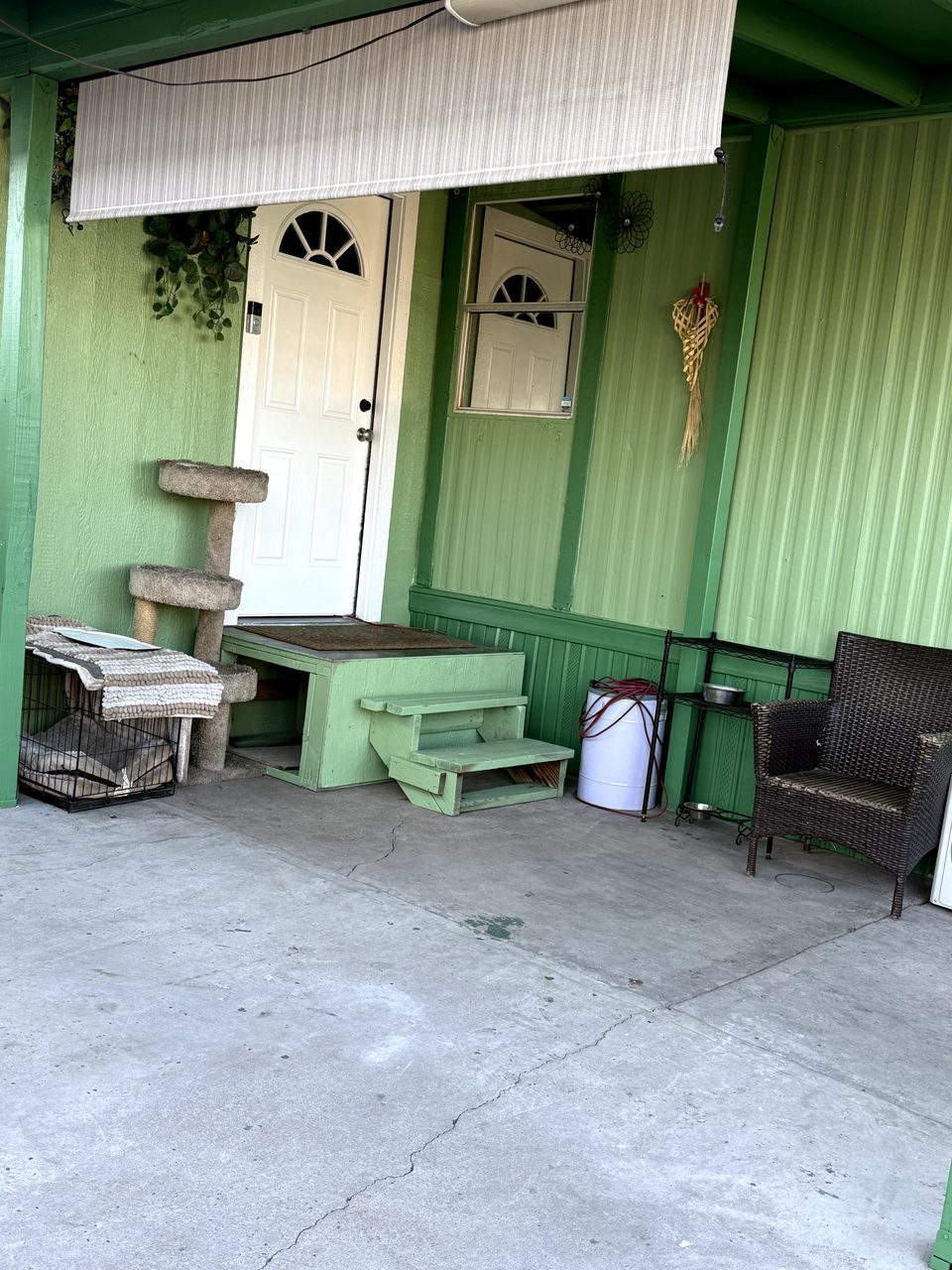
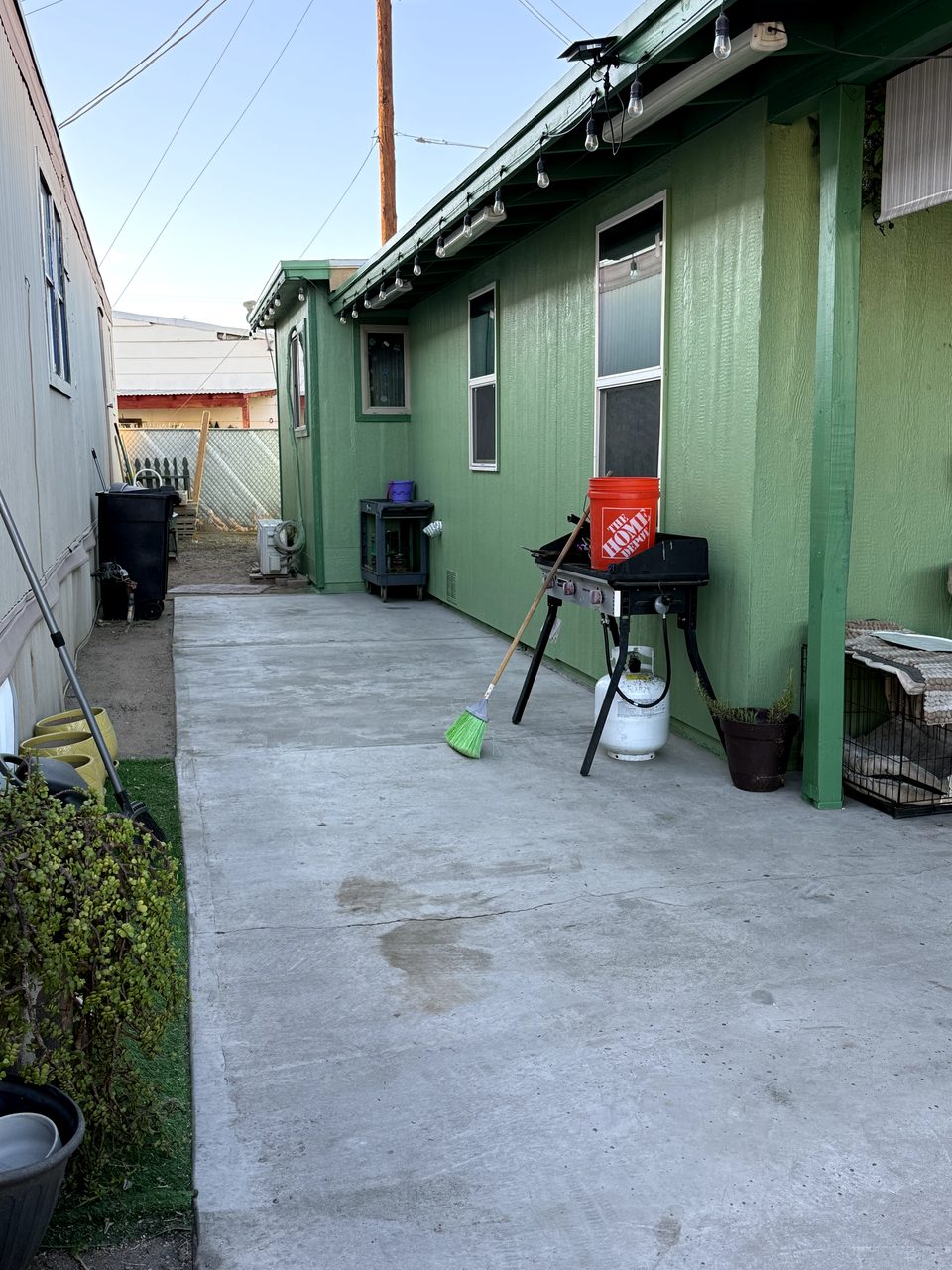
With the house washed, sealed, and primed, the color went on, and the owner went bold. We laid down a light sage green across the main field of the siding, then a deep forest-green band along the lower portion of the walls like a wainscot. The trim, fascia, carport posts, and the beams under the porch all went a deep green to frame it, and we left the doors white so they pop as clean accents against all that color. Over the primer we put two finish coats, because one coat of a color this bold over siding this faded would have looked thin and patchy. The result looks deliberate, not just freshly painted.
For the topcoat we used a quality exterior acrylic, and that choice matters on metal. Metal expands and contracts as it heats up and cools down through an Arizona day, and a flexible acrylic moves with it instead of cracking. A stiff, brittle coating would split along the panel seams the first hard summer. Acrylic also holds its color against the UV here better than a cheap paint, which is what you want when you've committed to a real color like this.
Doing it right in the Phoenix summer heat
This was a June exterior, in the heat, and metal makes that trickier, not easier. A metal wall in direct Phoenix sun gets far hotter than the air around it, often well past what the paint can take, and paint applied to a surface that's too hot skins over before it can bond. So we chased the shade around the house and worked each wall when it was off the direct sun, checking the surface temperature instead of just the thermometer. The light sage we chose for the main field helps too, because a lighter color reflects more heat than a dark one and won't run as hot on a metal wall once it's up.
The result
The home went from a tired, chalky tan box to a clean, bold green that looks brand new from the street. The metal siding, which a lot of people would have told the owner to just live with or replace, took the new color beautifully because the prep underneath it was done right. You can see the before, in-progress, and finished photos in our gallery.
This job was all about our exterior house painting and the surface prep and repair that makes an exterior repaint actually last. For more on the products and color choices behind it, see our guides on why exterior paint chalks and peels in the Arizona sun and exterior colors that keep an Arizona home cooler.
Frequently asked questions
- Can you paint over old metal or mobile-home siding?
- Yes, and it comes out great when the prep is right. Old metal siding chalks instead of peeling, so the keys are washing off that chalky, oxidized layer, scuffing and de-glossing the slick factory finish, treating any rust back to sound metal, and using a bonding primer made for metal before the color goes on. Done in that order, metal siding holds a fresh coat for years.
- Why does metal siding need a special bonding primer?
- Factory metal siding is slick and already coated, and standard wall primer doesn’t grip a surface like that. A bonding primer, a direct-to-metal type, is made to stick to slick, previously painted metal and give the topcoat something to hold onto. It’s the most important product on a metal repaint. Skip it and even a great paint can sheet off down the road.
- How long does paint last on metal siding in the Arizona sun?
- With proper prep and a quality exterior acrylic, you can expect a metal-siding repaint to hold up for years before it needs a refresh, often in the range of five to seven. Lighter colors fade slower than dark ones under our UV, and the prep underneath, especially the wash and the bonding primer, is the biggest factor in how long it lasts.
- Will the paint crack when the metal expands in the heat?
- Not when you use the right paint. Metal expands and contracts through an Arizona day, so we use a flexible exterior acrylic that moves with the panels instead of a stiff coating that would crack along the seams. That flexibility is why the coating stays intact through the heat.
- Should a metal mobile home be a light or dark color in Phoenix?
- A lighter color is the cooler, safer bet, because it reflects more heat and won’t run as hot on a metal wall. That doesn’t mean you can’t have a bold look. On this home we kept the main field a light sage so it stays cooler, then used the deep greens for the lower band, the trim, and the posts, so the house still reads bold without baking.
Ready for a fresh coat?
Get a Free Estimate